
نتواصل لأجل أطفال سعداء
We Communicate For Happy Children
We Communicate For Happy Children
 2025: The Peak of Child Rights Violations
4 February 2026
Prepared by “the Media and Communication Department at ANECD”
The year 2025 witnessed challenges that were perhaps the most severe in our modern history, putting at stake the rights of young children. Millions of children faced the repercussions of multidimensional crises, manifested in wars and conflicts, food and climate crises, in addition to inequality in all its forms. The greatest impact was on children in low or middle income countries where children are considered the most vulnerable and impoverished, especially in Arab countries, from Gaza to the occupied West Bank/Palestine, Syria, Lebanon, Yemen, all the way to Sudan and Somalia. In these countries, the most basic elements of safe childhood have been taken away. Nevertheless, a glimmer of hope has emerged from the concerted efforts of humanitarian, scientific, and academic work concerned with the early childhood sector at the regional Arab and at the global levels.
2025: The peak of Child Rights violations
During 2025, around eight million babies were born in areas affected by conflicts, wars, and climate disasters. Many mothers gave birth in tents, ill-equipped displacement camps, or communities hit by disasters, according to Save the Children.
Last year witnessed grave violations of children’s rights affecting millions and described by the United Nations as an unprecedented peak. These violations ranged from killing and maiming to recruitment, abduction, sexual violence, and lack of access to education, protection, and medical care. The global shortfall in humanitarian aid funding exacerbated the situation. Consequently, UNICEF ruled out any improvement in the foreseeable future given the ongoing wars and crises.
At the nutritional level, the picture is bleak, with a sharp decline in funding for relevant international organizations, most notably the World Food Program, leaving at risk millions of children dependent on the program assistance. In this context, UNICEF presented a picture of the scale of suffering during 2025 based on UN figures: approximately 43 million children under the age of five worldwide suffered from acute malnutrition and 150 million from chronic malnutrition.
To illustrate the depth of the crisis, famine was confirmed for the first time within 2025, a single year, in two countries, Sudan and Gaza/Palestine. According to UNICEF, these famines were man-made, resulting from war and conflicts.
In Gaza where famine was declared last year and where infants, children, and the elderly died from starvation and malnutrition, the situation remains extremely fragile. Large numbers of children, mothers, and nursing mothers continue to suffer from hunger, including 10,0000 experiencing acute food insecurity, according to UNICEF. The reason is the refusal of the Israeli occupation to allow the entry of necessary aid as stipulated in the first phase of the ceasefire agreement. As a result of malnutrition and weakened immunity, coupled with a severe shortage of medicines and medical supplies, Gaza recorded deaths from meningitis among children despite the relative progress achieved in some areas following the agreement, notably health and nutrition.
This comes as children continue to be killed in Gaza by Israeli shelling either on houses remains and refugee tents or while delivering aid, by freezing temperatures, or by drowning due to the complete destruction of homes and the lack of adequate protection in refugee tents. The number of these deaths has exceeded 100 since the presumed ceasefire in October 2025. Forced displacement continues, health conditions are deteriorating, and hundreds of thousands remain out of school despite humanitarian and community initiatives attempting to compensate children for some of what they had missed.
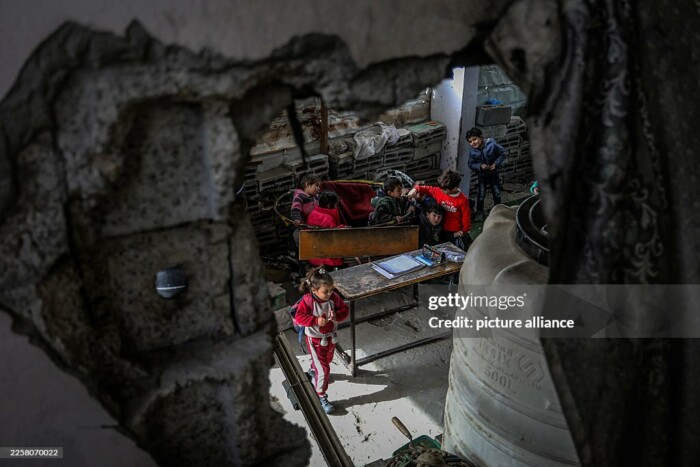
(Displaced Palestinian children attend a class at “Rawdat Tayba”, a volunteer-run educational center partially damaged by Israeli strikes, in Khan Younis. “Rawdat Tayba” was established by volunteer teachers to provide basic education for displaced children who have been out of school for nearly two years due to the destruction of schools during the war. Photo: DPA via Getty Images. 28 January 2026).
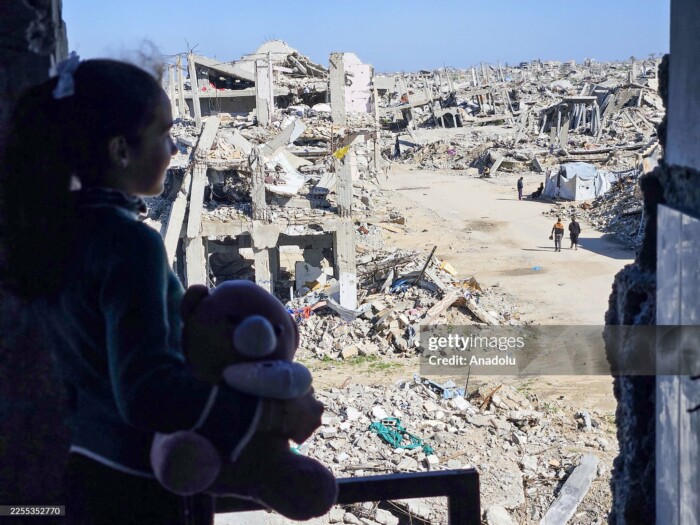
(A Palestinian girl inside a building on the verge of collapse in Khan Yunis, Gaza Strip, Palestine. The Strip is facing a crisis of damaged and unstable buildings, and a number of Palestinians, including children, have been martyred due to building collapses. Photo: Anadolu Agency via Getty Images. 11 January 2026).
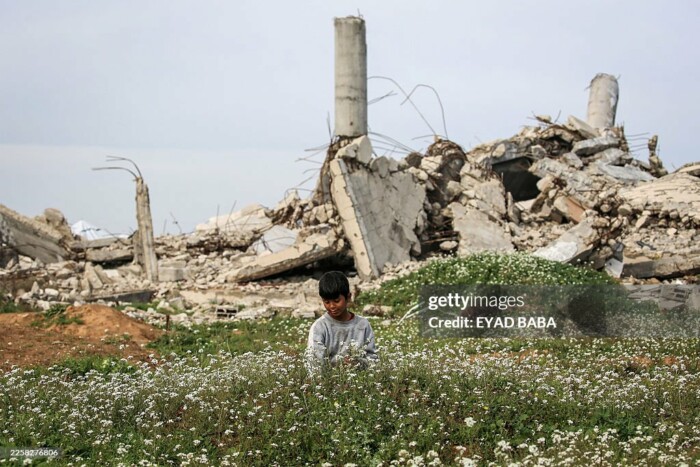
(A child picks flowers from a field near destroyed buildings in the Nuseirat camp for Palestinian refugees north of Deir al-Balah in the central Gaza Strip on January 29, 2026. Photo by AFP via Getty Images).
As for Sudan, after spending ten days in Darfur, the head of communications at UNICEF summarized the scale of the disaster:
“Even with years of experience working in emergencies, what I witnessed was unlike anything before. The scale of displacement, the fragmentation of the conflict, and the collapse of essential services have created a situation where every child is living on the brink”.
In Sudan, children continue to be killed, injured, and subjected to violations, including rape and other forms of sexual violence, used as a tactic of war, with children as young as one among the survivors. The displacement crisis, both internal and external, continues to worsen. UNICEF reports that more than five million children have been forced to flee their homes, i.e. an average of 5,000 displaced children every day, with repeated displacement, attacks, and violence occurring during their journeys.
At the nutritional level, Sudan is experiencing the world’s worst hunger crisis. According to UNICEF estimates, 21 million people are expected to face acute food insecurity in 2026. North Darfur is the epicenter of Sudan’s malnutrition emergency, with hundreds of thousands of children lacking access to essential food and healthcare despite all the health services provided last year. UNICEF indicates that the collapse of health systems, critical water shortages, and the breakdown of basic services are compounding the crisis, fuelling deadly disease outbreaks and placing an estimated 3.4 million children under five at risk.
At the educational level, eight million children in the country, equivalent to 50% of school-aged children, have been out of school for 500 days since the outbreak of war in April 2023, according to Save the Children.
In short, UNICEF expects that around two thirds of Sudan’s population, an estimated 33.7 million people, will require urgent humanitarian assistance during 2026. Half of these are children, i.e. roughly 17 million. UNICEF adds that access to life-saving aid remains severely restricted in large parts of the country, worsening the humanitarian crisis.
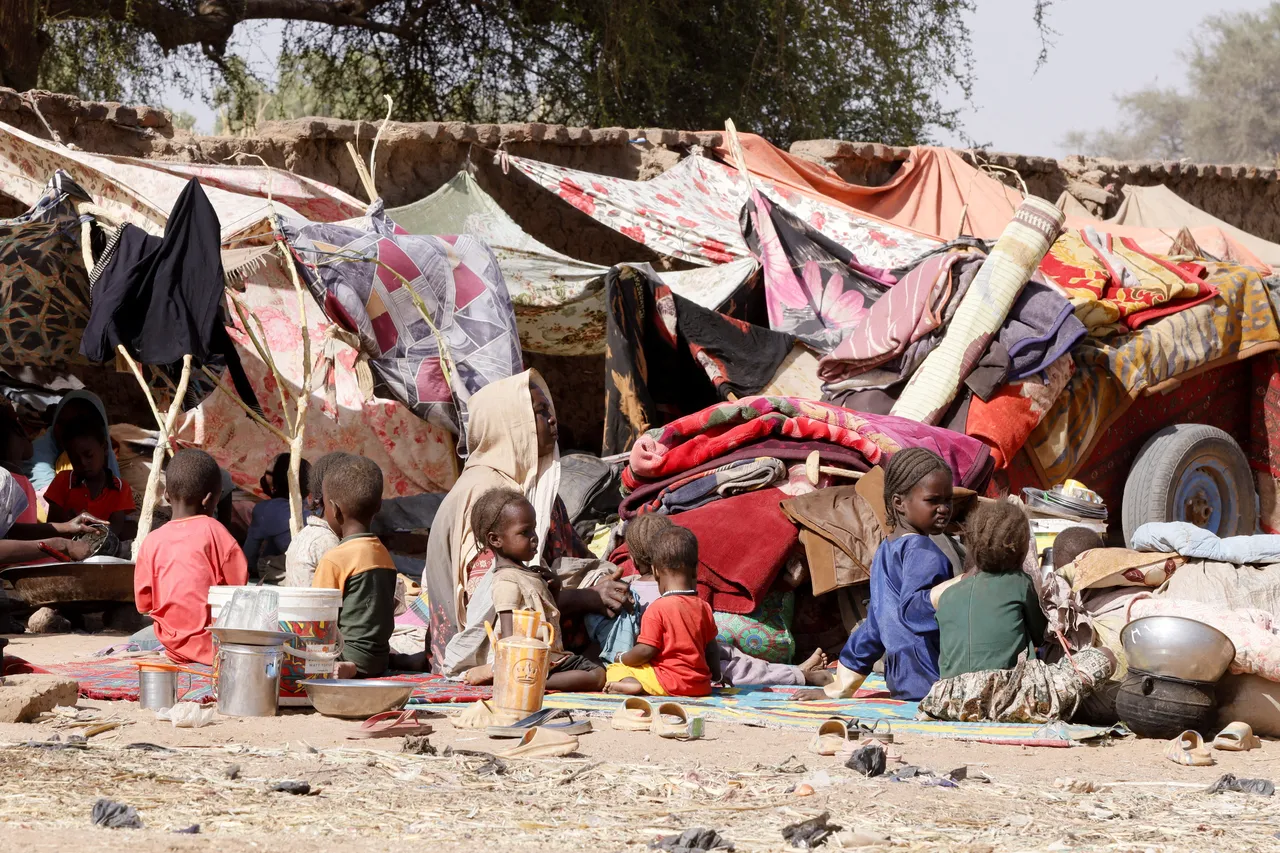
(Sudan. Photo: Reuters)
As for Lebanon, children and caregivers continue to suffer from multifaceted economic, social, health, nutritional, and educational crises despite some signs of improvement with the beginning of the year.
According to UNICEF, 1.3 million children in Lebanon need assistance in 2026. The ongoing Israeli bombardment of lands, houses, and temporary shelters, particularly in the South, exacerbates these crises. A year after the ceasefire agreement, the deaths of hundreds including children, and the wounding of hundreds, including over one hundred children, tens of thousands of families and children remain displaced or unable to resume their normal lives. This threatens the school year for the second consecutive year and impacts mental health.
Additionally, Lebanon enters the new year with food security remaining fragile and highly vulnerable to shocks and crises. According to a World Food Program analysis, the percentage of people facing acute food insecurity in Lebanon is expected to increase to 18% of the population between April and July 2026. Local communities also face water shortages linked to climate change and war damages, exposing residents and children to an increased risk of waterborne diseases. UNICEF also warns against declining infant vaccination rates, noting that by the end of 2025, measles vaccination coverage reached only 67%, increasing the risk of outbreaks of vaccine-preventable diseases.
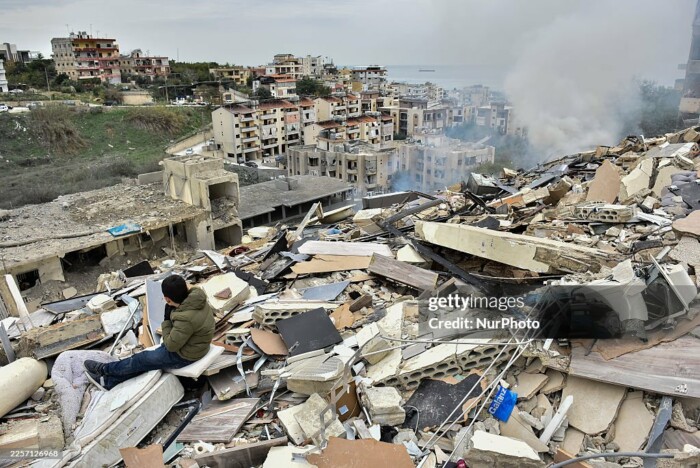
A view of the destruction after Israel’s attack on the town of Kanarit in Sidon, Lebanon, on January 22, 2026. (Photo by Fadel Itani/ NurPhoto via Getty Images).
Highest poverty rates among the world’s youngest children
At the end of last year, UNICEF published a report containing alarming figures regarding the impact of poverty on young children. The organization states that nearly one fifth of the world’s children live in extreme poverty, noting that children are more than twice as likely as adults to live in extreme poverty.
In numbers, 22.3% of children aged 0-4 years were living in extreme poverty, compared to 14.9% of those aged 15-17 in 2024. Half of children living in fragile situations and conflict-affected areas suffer from extreme poverty, compared to 11.4% of children outside these areas.
In low and middle income countries, more than one in five children (417 million) are severely deprived in vital domains such as education, health, housing, nutrition, sanitation, and water. Rural areas have the highest proportion of child poverty (79%). Children with disabilities are also far more likely to live in extreme poverty than other children due to the high cost of care.
Climate change: The point of no return and young children
The year 2025 was one of the two hottest years in the historical climate record, exceeding the global average temperature by 1.5°C, with mounting warnings of reaching the point of no return.
Young children are the most vulnerable to these extreme weather events, including floods, heat waves, and wildfires, which force millions of children to be displaced. According to UNICEF, every year, four out of five children face at least one risk due to these conditions. These figures will rise dramatically over the next quarter century, placing the world before multiple responsibilities and challenges. The poorest children are the most vulnerable to these risks.
The pillar of action and policies
Despite the immense challenges facing the early childhood sector globally, and particularly in Arab countries, noting that we highlighted only a small part of them, this sector has achieved significant milestones reflecting a strong commitment to change. This is due to dedicated efforts of which the Arab Network for Early Childhood (ANECD) and its partners in the region constituted a pillar. At the head of these achievements are early childhood development policies directly linked to the ecology of young children. This progress has manifested in several areas that will continue to be addressed this year and in the coming years. These include substantial increases in children’s school enrollment rates, the institutionalization of quality standards in nurseries and kindergartens, attention to the mental health of children, parents, and caregivers, a focus on parenting and the integration of fathers in caregiving, the development of digital health systems, and early childhood research during crises to support national policies for this sector.
(Translated by: Rania Alsahili)
